Sungrow Retains No.1 Position in 2025 S&P Global PV Inverter Shipments Rankings
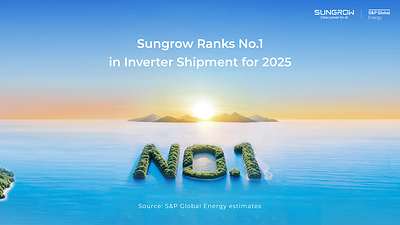
HEFEI, China, Aug. 10, 2026 /PRNewswire/ -- Sungrow, the global leading PV inverter and energy storage system (ESS) provider, has once again been named the No. 1 PV Inverter shipments by S&P Global 2025. This achievement reflects Sungrow's continuous commitment to technological innovation, global expansion, and customer-centric services.
Driving Breakthroughs Via Technological Innovation
Sungrow has launched the world's first PowerMatrix Inverter at SNEC 2026, introducing a new approach to inverter system architecture. This solution delivers enhanced efficiency, optimized costs, and improved system stability across diverse application scenarios. Sungrow has also achieved the world's first field engineering validation of wide-frequency oscillation solutions, demonstrating its capability to address emerging challenges in modern power systems and support the integration of renewable energy at scale. These innovations revealed Sungrow's strong R&D capability, with technical professionals accounting for approximately 40% of its workforce.
Expanding Global Presence with Localized Capabilities
Sungrow's global footprint now spans more than 100 countries and regions, supported by 4 global manufacturing bases and the industry's most extensive grid access capabilities. With more than 1 TW of accumulated global grid-connected experience, Sungrow leverages its advanced manufacturing capabilities and an agile global supply chain to continuously provide compliant, localized, and efficient solutions across diverse markets worldwide.
Delivering Lifecycle Support Through Professional Services
Beyond technology and products, Sungrow has established a global service network with more than 520 service locations, over 1,200 technical service engineers, and more than 400 authorized service partners. By combining advanced hardware, digital solutions, and localized service capabilities, this extensive ecosystem enables rapid response, localized support, and professional assistance from project deployment to long-term operation and maintenance.
With Sungrow's cutting-edge inverter technologies, strengthening global manufacturing capabilities, and building a comprehensive customer service network worldwide, Sungrow will continue to support the construction of new-type power systems and bridge to a sustainable future.
 View original content to download multimedia:https://www.prnewswire.co.uk/news-releases/sungrow-retains-no1-position-in-2025-sp-global-pv-inverter-shipments-rankings-302846808.html